Batch Cooking Protein Sources: Time and Safety Considerations
Protein sources represent a fundamental component of many meal structures. Understanding how different proteins behave in batch cooking contexts requires examining both the cooking process and the food safety considerations that follow preparation.
Chicken Preparation in Batch Contexts
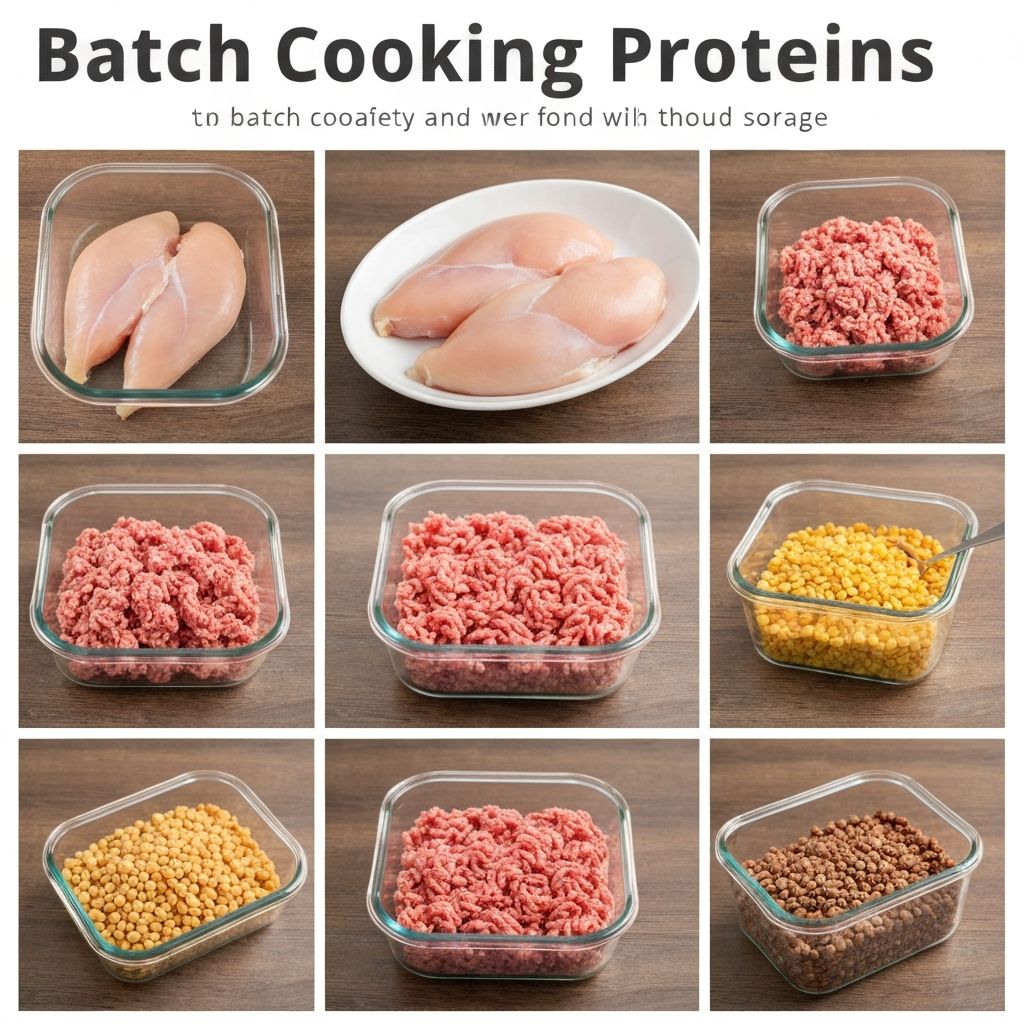
Chicken breasts are commonly used in meal preparation systems. When cooking chicken in batch quantities, several approaches exist: roasting on trays in an oven, poaching in water or stock, or steaming. Each method produces different texture outcomes and influences storage properties.
Roasting Method
Roasting chicken breasts on trays at 200°C requires 20–25 minutes. A single breast takes approximately the same time as eight breasts arranged on a larger tray. The time-saving advantage is therefore limited—what changes is that one cooking session produces eight portions rather than one.
After cooking, chicken should cool to room temperature before refrigeration. Refrigerated cooked chicken remains safe for 3–4 days. Frozen chicken can be stored safely for several months.
Poaching and Steaming
Water or stock-based cooking methods produce different texture outcomes than roasting. Poaching involves simmering chicken in liquid for 15–20 minutes. Steaming takes 12–15 minutes. Both methods produce moist chicken, though some people prefer the texture of roasted chicken.
Minced Meat Preparation
Ground beef, pork, or turkey can be browned in large batches. A standard large pan can accommodate 500–750g of mince, browning it in 10–15 minutes while broken into small pieces with a spoon.
After browning, mince should be cooled before refrigeration. Proper cooling prevents the temperature of the refrigerator from rising. Cooked mince remains safe for 3–4 days under refrigeration or several months when frozen.
Pulses and Legumes
Dried lentils and beans represent protein sources that benefit substantially from batch cooking. Cooking time is largely unaffected by quantity, making batch cooking particularly efficient.
Lentils
Red lentils cook in 15–20 minutes without prior soaking. Brown or green lentils require 20–30 minutes. A single pot can cook 200g or 1kg of lentils in nearly identical times. Storage at room temperature before cooking extends indefinitely. Once cooked, lentils remain safe for 3–4 days under refrigeration or several months when frozen.
Beans
Dried beans (kidney beans, black beans, chickpeas) require soaking for 8–12 hours or rapid boiling for 2 minutes followed by 1 hour of soaking. After soaking, cooking typically requires 1–2 hours. This extended cooking time makes beans ideal for batch preparation—one cooking session produces a large quantity of cooked beans suitable for freezing.
Eggs in Batch Contexts
Boiled eggs can be prepared in large quantities. A large pot of water can boil 12–24 eggs simultaneously. Soft-boiled eggs (6 minutes), medium-boiled eggs (8–9 minutes), and hard-boiled eggs (12 minutes) all cook in nearly identical times regardless of quantity.
Cooked eggs remain safe for 3–4 days under refrigeration. Hard-boiled eggs in shells can be stored longer than peeled eggs, as the shell provides a protective barrier.
Food Safety Overview for Cooked Proteins
| Protein Type | Cooking Temperature | Refrigerator Safe Time | Freezer Safe Duration |
|---|---|---|---|
| Chicken | 75°C internal temperature | 3–4 days | Several months |
| Minced Meat | 75°C internal temperature | 3–4 days | Several months |
| Lentils | Until tender (no specific temperature) | 3–4 days | Several months |
| Beans | Until tender (no specific temperature) | 3–4 days | Several months |
| Hard-boiled Eggs | Boiling water 12 minutes | 3–4 days (peeled); 7 days (in shell) | Not typically frozen |
Understanding the specific requirements of each protein source allows for informed decisions about preparation methods and storage approaches.